


Art therapy uses creative work within a therapeutic relationship to support emotional understanding and change. It may suit people who want to explore feelings beyond conversation alone, but it is not simply a craft activity or a promise of quick relief. The value lies in the process: creating, noticing, reflecting, and choosing what to do next.
Key points to know
- Professional art therapy is guided by a trained mental health clinician, not by artistic talent or a particular visual style.
- Making and discussing art can help people notice emotions, perspectives, and patterns that are difficult to put into words.
- Personal art-making can be restorative, but it is not the same as clinical therapy.
- Evidence is promising for some outcomes, yet research does not guarantee the same results for everyone.
What makes art therapy different from making art for relaxation?
Art therapy is a mental health practice in which art-making is part of a purposeful therapeutic relationship. The American Art Therapy Association’s definition describes it as combining active art-making, creative process, psychological theory, and human experience. A therapist helps connect the creative process with goals that matter to the client.
Painting at home, doodling, or using a coloring book can still be calming or meaningful. Those activities do not automatically become therapy, because clinical work includes professional training, an agreed purpose, and attention to the person’s context. In therapy, the image is not a test with a fixed interpretation. Your own associations and experience matter more than a therapist assigning universal meaning to a color or shape.
How can creative practice support emotional growth?
Creative work can give feelings a form that is easier to notice and discuss. A person might use color, shape, texture, or space to represent an experience, then observe what changes while working. This can create room to pause before reacting and develop more deliberate emotional self-regulation.
The aim is not to decode a picture as if it revealed a hidden diagnosis. Instead, a therapist may ask what you notice, what felt easy or difficult, and whether the image connects with something in your life. Over time, reflection may help a person recognize recurring emotional patterns and consider a different response.
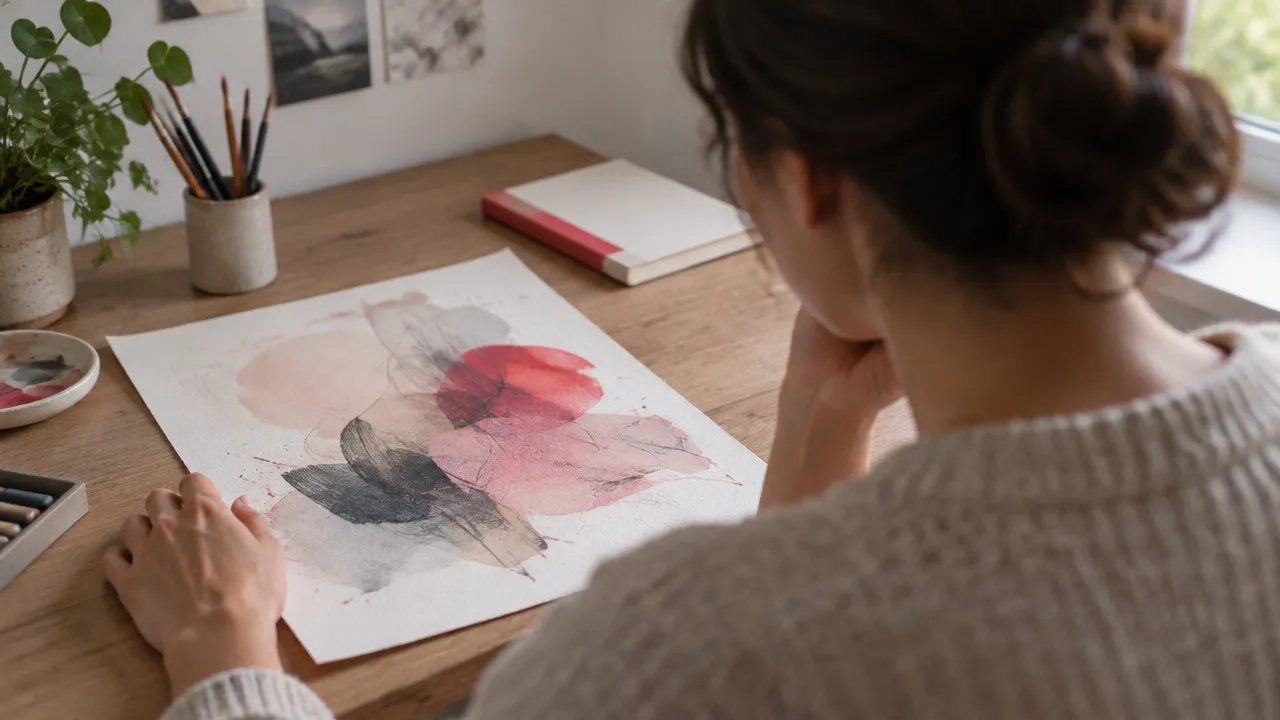
What happens in a session with an art therapist?
A session typically combines conversation, art-making, and reflection, with the balance shaped by your needs and the therapist’s approach. You might be invited to choose from materials such as pencils, paint, clay, or collage. You do not need prior experience, and you can ask questions or decline an activity.
After creating, you and the therapist may discuss your experience rather than judge the finished work. For example, someone who feels overwhelmed by a major transition might draw different parts of the change, then reflect on what feels uncertain and what support is available. A useful therapist helps you connect observations to your own choices, not impose a meaning. This reflective process can complement practices such as reflective journaling.
What does research say, and what are its limits?
Research suggests art therapy may support some aspects of mental health, but findings should be interpreted with care. A 2026 systematic review and meta-analysis included 29 studies with 2,077 participants and reported improvements in psychological well-being, depression, anxiety, and cognitive function. The authors also noted that evidence for some outcomes, including loneliness, remained uncertain, so these results do not predict an individual’s response.
A separate 2024 review of randomized trials found possible benefits across some health outcomes while noting that most included studies were of low quality. That matters: art therapy can be a meaningful part of care, but should not be presented as a guaranteed cure or a replacement for other treatment. Ask a clinician how it fits your circumstances and how you will assess whether it is helping.
How can you choose a therapist or explore art-making at home?
Choose a practitioner with appropriate mental health training, supervised experience, and credentials recognized where you live. In the United States, the American Art Therapy Association identifies graduate-level education and credentials such as ATR or ATR-BC; local licensing rules can differ. You can use its art therapist locator as a starting point, then ask about experience, confidentiality, fees, and how goals are set.
If you want to try a creative reflection on your own, keep it low-pressure: choose a color or material, make marks for a few minutes, and notice what you feel without forcing an interpretation. Stop if the process becomes distressing. Personal art-making can support reflection, but trauma or intense symptoms are best explored with qualified professional support.
Frequently asked questions
Do I need to be good at art to try art therapy?
No artistic skill is required. Art therapy focuses on the experience of creating and reflecting, not on producing attractive work. A trained therapist can help you choose materials and explore what the process brings up, at a pace that feels manageable.
Is art therapy effective?
Art therapy may help people express feelings, build self-awareness, and work toward personal or relational goals. Research findings are promising but not conclusive for every person or concern. A qualified therapist can discuss whether it fits your needs and how it might complement other care.
What happens in an art therapy session?
A session usually involves making art with materials such as pencils, paint, clay, or collage, then reflecting with the therapist on your experience. You do not need to explain every image or share more than feels comfortable. The therapist should clarify goals and boundaries with you.
How do I find a qualified art therapist?
Look for a mental health professional with graduate-level art therapy education and credentials recognized in your location. In the United States, the American Art Therapy Association lists credentials such as ATR and ATR-BC. Ask about relevant experience, approach, fees, and how progress will be reviewed.
Can art therapy help with anxiety or trauma?
Art therapy can be used to support people facing many challenges, but it is not a guaranteed treatment or a substitute for care you need. Discuss your goals, symptoms, and safety with a qualified clinician. They can help decide whether art therapy belongs in a broader treatment plan.