
We often see people try to change through force alone. They set goals, create rules, and push hard for a few weeks. Then something starts to crack. The effort feels heavy. The new behavior becomes hard to keep. In our experience, this happens when change is built on pressure but not on inner agreement.
Ethical alignment means our actions, goals, and methods match the values we truly accept.
When that match is missing, growth may look real from the outside, but it often creates tension on the inside. A person may earn more, speak better, or appear calmer, while feeling divided within. That split drains energy over time.
We have seen this in simple moments. Someone wants to be more disciplined, but uses shame as fuel. Another wants better relationships, but keeps using control to feel safe. A third wants peace, yet avoids honest conversations. The stated goal sounds healthy. The path does not.
Change lasts when conscience agrees.
Why values shape lasting change
Personal change is not only a matter of behavior. It also involves meaning. If we act against what we believe is right, our mind and emotions tend to react. We may feel guilt, confusion, irritation, or numbness. These signs are not random. They often show that our choices are not aligned with our deeper standards.
When values and behavior move together, inner resistance tends to decrease.
This does not mean the process becomes easy. It means the effort gains coherence. We know why we are doing it, how we want to do it, and what kind of person we are becoming through it. That clarity supports consistency.
A longitudinal finding on moral standards and well-being helps explain this link. Research published in a longitudinal study on moral standards, ethical behavior, and purpose in life found a positive association between ethical conduct and a sustained sense of purpose. We think this matters because purpose is one of the quiet forces behind long-term change. Without purpose, habits become mechanical. With purpose, they gain direction.
What ethical misalignment looks like
Ethical misalignment is not always dramatic. Sometimes it appears in small compromises repeated over time. We tell ourselves the result will justify the method. Later, the method starts shaping our character.
We can notice misalignment through patterns like these:
Pursuing self-improvement through self-rejection.
Seeking connection while hiding what we really think.
Wanting freedom while living by constant approval.
Trying to heal while refusing responsibility for impact.
These patterns create friction because the stated aim and the lived process point in different directions. A person may say, “I want to grow,” but their daily choices say, “I want to escape discomfort at any cost.” Growth and escape do not build the same life.
Those who spend time developing self-knowledge often become better at seeing this gap. They start to notice not only what they do, but the inner logic behind it. That is where real correction begins.
How ethical alignment supports inner stability
When we act in line with our values, we reduce the need to defend ourselves internally. We do not have to explain away our behavior as much. We do not have to hide from our own judgment. That creates a more stable base for change.
We usually see ethical alignment strengthening personal change in three ways:
It gives clear limits. We know what we will not do, even under pressure.
It improves trust in ourselves. We become more reliable in our own eyes.
It supports relational health. Others can feel when our words and actions match.
This is closely related to emotional maturity. A mature person does not only ask, “What do I want?” We also ask, “What is the cost, who is affected, and does this path respect what I claim to value?” That pause changes decisions.
Ethical alignment also deepens our relationship with consciousness. We become less driven by impulse and more able to witness our motives before turning them into action. This is not cold control. It is honest awareness.
How to bring values into daily change
Many people can name their values in a calm moment. The challenge comes in daily life, when fear, speed, and habit take over. So we need translation. Values must become practices.
We suggest a simple sequence:
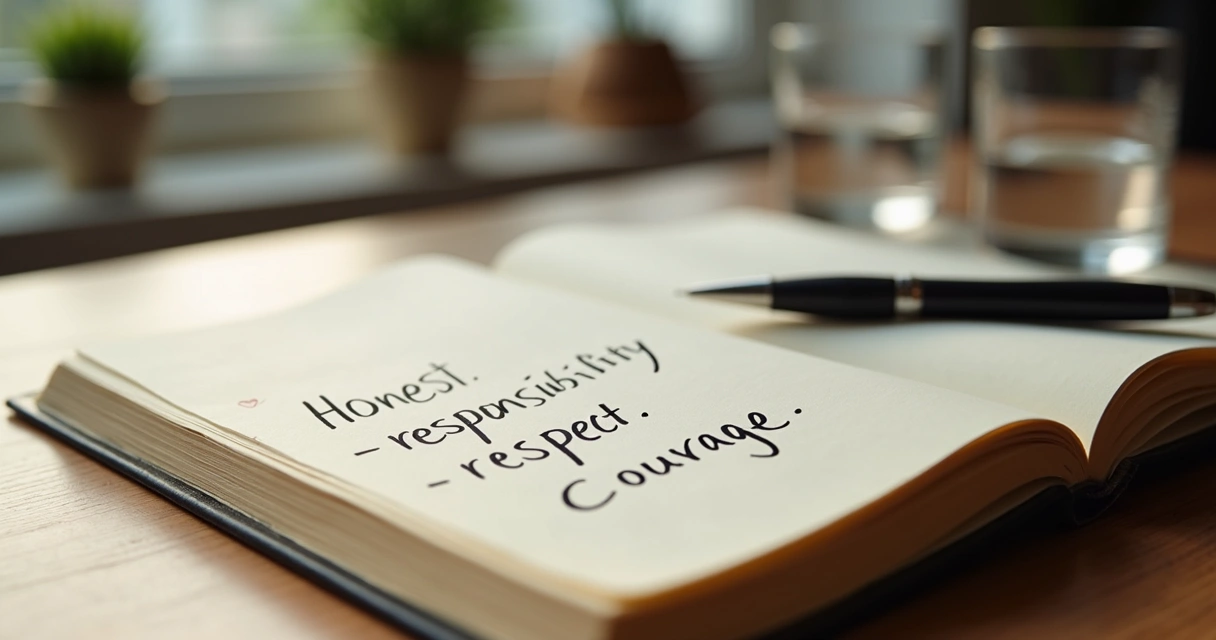
Name the value. Choose words with real weight, such as honesty, fairness, patience, or responsibility.
Define the behavior. Ask what that value looks like in speech, decisions, timing, and boundaries.
Check the method. Make sure the way we pursue a goal does not violate the value itself.
Review the impact. Notice how our actions affect us, other people, and the wider system around us.
For example, if we value honesty, the practice may be speaking clearly instead of pleasing everyone. If we value respect, the practice may be saying no without aggression. If we value responsibility, the practice may be repairing harm instead of denying it.
This kind of work is part of real personal growth. It asks more from us than image management. It asks for congruence.
Values become real in repeated choices.
Ethics is also systemic
Personal change is never fully isolated. We live in families, teams, friendships, and social structures. Because of that, ethical alignment is not only private. It affects patterns around us.
A person who learns to set honest boundaries may change the tone of an entire relationship. A leader who stops using fear may change the behavior of a whole group. A parent who admits mistakes may interrupt a pattern that lasted for years. Small acts can shift systems.
That is why ethical alignment connects with systemic change. We are not only asking whether a habit works for us today. We are asking what kind of pattern it strengthens over time. This question helps us move from short relief to deeper order.

When change feels slow
Ethically aligned change can feel slower at first. We may need to pause more, tell the truth sooner, face grief, or stop using tactics that once gave us fast relief. That can be uncomfortable. Still, slower does not mean weaker.
Fast change can impress, but aligned change is more likely to stay.
We think this is one reason many transformations fail after early success. The structure may be new, but the conscience has not been included. Then pressure returns, and the old pattern finds an open door.
When the process is aligned, progress may be quieter. Yet it tends to be more solid. We become less fragmented. Our choices start to make sense together. That kind of order supports long-term direction.
Conclusion
The role of ethical alignment in sustained personal change is simple to name and demanding to live. We do not change deeply by chasing better outcomes while ignoring the moral quality of our path. We change in a lasting way when intention, method, and impact begin to agree.
In our view, ethics is not an extra layer placed on top of growth. It is part of the structure that makes growth trustworthy. When we align values with action, we gain more than discipline. We gain coherence, purpose, and a steadier relationship with ourselves and others.
If we want change that remains, we need more than desire. We need inner consent.
Frequently asked questions
What is ethical alignment in personal change?
Ethical alignment in personal change is the match between our values, our goals, and the way we pursue them. It means we do not seek growth through methods that betray what we believe is right.
Why is ethical alignment important?
It matters because change becomes more stable when our conscience supports it. Ethical alignment reduces inner conflict, strengthens purpose, and helps us trust our own choices over time.
How to align values with personal goals?
We can start by naming a few real values, then turning each one into daily behavior. After that, we check whether our methods respect those values and review the impact of our choices on ourselves and others.
Can ethical misalignment hinder personal growth?
Yes. Ethical misalignment can create guilt, confusion, and self-division. A person may reach a goal outwardly while feeling unstable inwardly, which makes the change harder to maintain.
What are examples of ethical alignment benefits?
Benefits include stronger self-trust, clearer boundaries, more honest relationships, and a deeper sense of purpose. It can also improve consistency because our actions feel meaningful, not forced.