


Meditation is a way to practice directing attention and noticing experience, not a demand to empty your mind. For beginners, a brief, repeatable session can build the skill of pausing between an inner reaction and what you choose to do next. The aim is not instant calm, but more deliberate awareness.
Key points to know before you begin
- Meditation is a family of practices, and not every approach focuses on the breath.
- A wandering mind is part of the exercise: noticing and returning is the practice.
- Start with a few minutes and a comfortable posture you can sustain.
- Benefits are possible, but results vary and meditation is not a substitute for professional care.
Meditation trains attention, not a blank mind
Meditation is a structured practice of bringing attention to an anchor or experience, noticing what is happening, and responding with intention. The anchor might be the breath, a sound, body sensations, a repeated phrase, or the experience of walking. Mindfulness is one approach that emphasizes awareness of the present moment without immediately judging it.
The goal is not to stop thoughts or force a peaceful mood. When attention gets pulled into planning, remembering, or worrying, you notice that shift and gently return. This repeated cycle can help you recognize mental habits before acting on them. If inner chatter is a familiar challenge, practical ways to work with mental noise and inner space can complement formal practice.
Choose a method that fits your attention
There is no single correct technique. A useful starting point is the one that feels accessible and safe enough to practice consistently.
- Breath-focused practice: Notice the physical sensation of breathing, such as movement in the chest or abdomen.
- Body scan: Move attention gradually through areas of the body, observing sensations without needing to change them.
- Loving-kindness practice: Silently offer phrases of goodwill to yourself and others.
- Walking meditation: Pay attention to steps, balance, and contact with the ground as you move.
- Guided practice: Follow spoken instructions when a voice helps you stay oriented.
Some people find bodily attention easier than sitting still. A simple embodied awareness exercise can offer another entry point if breath-focused practice feels uncomfortable.
How to start with a five-minute practice
Keep the first session small and specific. You do not need special equipment, a perfect posture, or a particular feeling to begin.
- Choose a quiet-enough place and sit on a chair, with both feet supported.
- Set a timer for five minutes so you do not need to check the clock.
- Notice one anchor, such as the breath at the nostrils or the contact of your feet with the floor.
- When you notice that attention has wandered, name it gently, such as “planning” or “remembering.”
- Return to the anchor and continue until the timer ends.
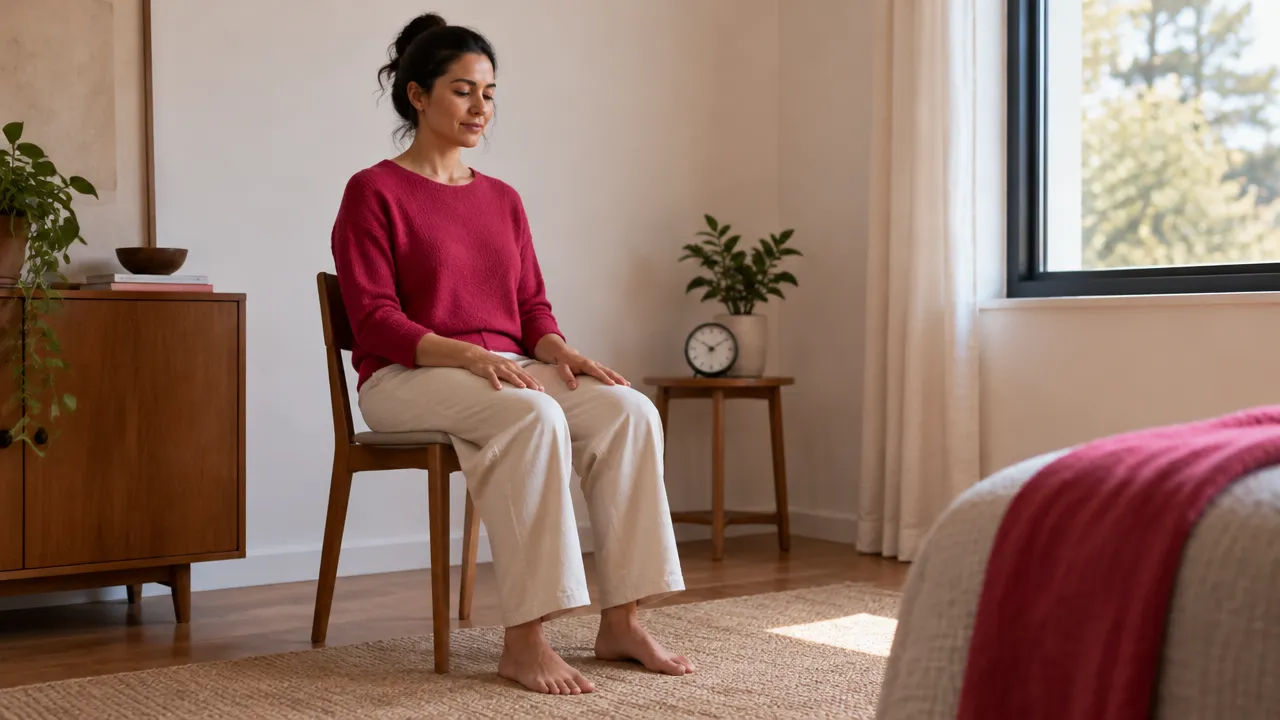
If a comfortable seat is not available, you can stand or walk slowly instead. Choose a time that fits an existing routine, such as after breakfast. A regular cue often works better than waiting until motivation appears; building consistent daily habits can support that process.
What to do when the mind wanders or feelings arise
Notice what is happening, name it briefly if that helps, and choose whether to return to your anchor or shift to a grounding practice. Distraction does not mean you failed. Each time you recognize a thought and return, you have completed the central movement of attention training.
Strong feelings may arise, too. You do not have to examine every emotion or remain still through mounting distress. Open your eyes, feel your feet on the ground, look around the room, or end the session. Learning to identify emotional triggers before reacting can also help connect quiet practice with choices in everyday life.
What research can and cannot promise
Research suggests that some mindfulness-based approaches may help with stress-related concerns, anxiety, depression, or sleep, but evidence and effects differ by condition and program. In figures reported by the U.S. National Center for Complementary and Integrative Health, meditation use among U.S. adults rose from 7.5% in 2002 to 17.3% in 2022. The same NCCIH evidence and safety summary describes a 2020 review in which about 8% of participants reported negative effects, most often anxiety or depression.
These figures are not a prediction of what will happen to any one person. Meditation should not replace medical or mental health care, and it is reasonable to stop or seek qualified guidance if practice increases distress. The NHS also notes that mindfulness does not help everyone and can make some people feel worse, as described in its mindfulness guidance.
Frequently asked questions
What are the three principles of meditation?
Many meditation practices use three practical principles: choose an anchor for attention, notice when the mind wanders, and return without judging yourself. These are useful training steps, not universal rules. Some traditions use movement, compassion, prayer, or other methods, so the practice can vary by purpose and tradition.
What is a simple five-minute meditation exercise?
Sit comfortably, set a timer for five minutes, and rest your attention on the feeling of breathing. When you notice a thought, silently label it “thinking” and return to the breath. You do not need to clear your mind or feel calm. The repeated return is the exercise.
What is the best time to meditate?
The best time is a time you can repeat without adding pressure. Many people choose a quiet moment after waking or before bed, while others practice during a work break. Try one time for a week, then adjust if it regularly conflicts with sleep, responsibilities, or your natural rhythm.
Who should be cautious about mindfulness meditation?
Meditation is not automatically helpful for everyone. If focusing inward brings up distress, panic, intrusive memories, or a sense of disconnection, stop or switch to a grounding activity with your eyes open. Consider guidance from a qualified mental health professional, especially if you have a mental health condition or trauma history.
How long does it take meditation to rewire the brain?
There is no established timeline for meditation to rewire the brain, and “rewiring” can overstate what research can show. Effects vary by person, practice, and outcome. Treat the practice as a way to train attention over time, not a guaranteed biological reset or a promise of quick transformation.