


We all carry values that shape how we love, work, spend, forgive, and decide. At first, they can seem invisible. Then one day, they appear in full force. A couple argues about money. Friends drift apart over loyalty. A parent and adult child keep having the same tense talk. What looks like a simple disagreement is often a clash of values.
Personal values are the inner standards we use to judge what feels right, fair, meaningful, or acceptable.
In our experience, value differences do not always break relationships. What causes deeper damage is confusion, silence, or contempt. When we do not know what matters to us, we speak in reactions. When we do know, we can speak with more honesty and less blame.
We have seen this often. One person says, “You never make time for family.” The other says, “I am working for our future.” Both may be sincere. One values presence. The other values security. Neither feels seen. That is where repair must begin.
Why value differences feel so personal
Values are not random opinions. They are tied to identity, memory, culture, hope, and pain. That is why conflict around them can feel sharp. We are not just debating a preference. We are defending a way of living.
A Pew Research Center survey on dating attitudes found that 23% of daters would not consider a relationship with someone of a different religion, and 15% would not consider dating someone of a different race or ethnicity. These choices show how values guide relationship boundaries long before a bond becomes serious.
Still, not all differences have the same weight. Some can be managed with respect. Others affect daily life so much that they require hard decisions. The real task is to know the difference.
Not every difference is a threat.
How to tell what the conflict is really about
Before trying to solve a disagreement, we need to name it well. Many fights that look practical are emotional and ethical underneath. We may argue about a holiday plan, but the deeper issue is belonging. We may argue about budget choices, but the deeper issue is freedom, status, or safety.
We think it helps to ask a few direct questions:
What exactly is upsetting us?
What value feels ignored or violated?
Is this about a single event, or a repeated pattern?
What story are we attaching to the other person’s choice?
These questions slow the mind down. They move us away from accusation and toward clarity. That shift matters.
Most value conflicts become less chaotic when we separate the event from the meaning we gave it.
If we say, “You are selfish,” the talk closes. If we say, “When plans changed without notice, we felt that commitment was not shared,” the talk can still move.

What can be reconciled and what cannot
Some values sit at the center of life. Others sit closer to habit or style. We do not help ourselves when we treat all differences as equal.
In general, these kinds of differences are often easier to work through:
How we celebrate events
How social or private we prefer to be
How structured we like our routines
These tend to be harder because they shape trust, identity, and future direction:
Honesty and fidelity
Views on parenting
Beliefs about money and control
Faith, ethics, and long-term purpose
We also need to ask whether the conflict is between values or between behaviors. Two people may both value respect, yet behave in ways that feel disrespectful. In that case, the issue is not always the value itself, but the skill gap in how it is lived.
For readers who want to deepen this kind of reflection, our materials on self-knowledge and consciousness can support a more honest inner reading.
Steps for a calmer conversation
When values collide, timing and tone matter. A good conversation will not remove every difference, but it can reduce distortion and make better choices possible.
We suggest a simple sequence.
Start with self-definition. Name our own value before criticizing the other person.
Describe behavior, not character. Focus on what happened.
Explain impact without drama. Say why it matters in real life.
Ask for the other value in clear words. Do not assume motives.
Look for overlap. Many people share a goal, even if their methods differ.
Set one practical agreement. Keep it small and concrete.
For example, instead of saying, “You only care about success,” we might say, “We value time together, and lately work has taken all the space. Can we agree on one protected evening each week?” That kind of sentence has structure. It also leaves room for dignity.
In our view, emotional maturity is not the absence of tension. It is the ability to stay present without turning difference into attack. Readers working on this capacity may benefit from our category on emotional maturity.
Calm does not mean passive. It means speaking with firmness and without humiliation.
When compromise helps, and when it harms
Compromise is often praised as the answer to every conflict. We do not see it that way. Some compromises build trust. Others break self-respect.
A healthy compromise adjusts form while protecting meaning. An unhealthy compromise abandons meaning just to keep peace.
Let us make that plain. If one person values family connection and the other values rest, they may agree to shorten a visit. That is compromise. But if one person values honesty and is asked to accept repeated lying for the sake of harmony, that is surrender.
A study in relationship quality and self-transcendence values found that values such as benevolence and universalism are linked with stronger romantic relationship quality, partly because they support attitudes and motives that care for the bond itself. This suggests that some values create more room for repair because they include concern for the other person, not only the self.
That does not mean we should erase our limits. It means generosity works best when it stands beside clarity.
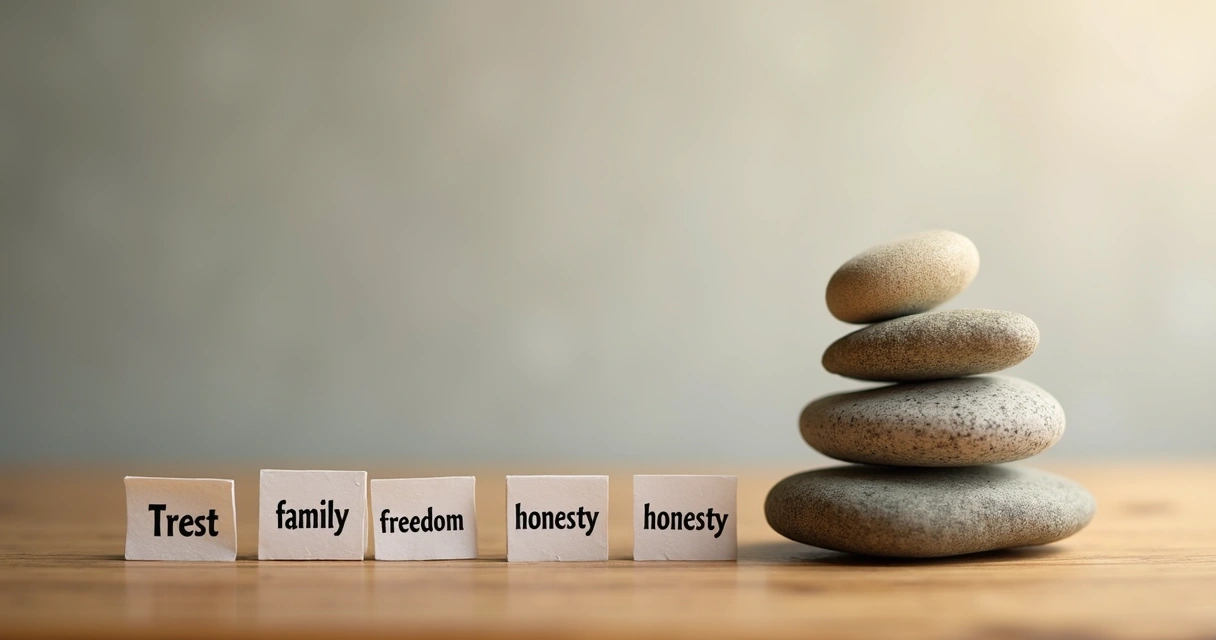
How relationships grow through value tension
Not every value gap should be closed. Sometimes the growth comes from learning to stay in contact across difference. We may still disagree on how to spend, pray, raise children, or define success. Yet if there is mutual respect, honest speech, and shared accountability, the relationship can mature.
We have seen people change not because they were pressured, but because they finally felt heard. That is a quiet turning point. Defensiveness drops. Curiosity returns.
If a pattern affects not only one bond but an entire family or group, it helps to see the wider structure too. Our content on systemic change and personal growth can help frame change in a broader way.
Conclusion
Reconciling differences in personal values is not about forcing sameness. It is about seeing clearly, speaking truthfully, and choosing with responsibility. Some differences can be integrated. Some need boundaries. Some reveal that a relationship must change form.
What matters is that we do not confuse silence with peace, or compliance with love. When values are named with honesty, conflict becomes easier to understand. And when understanding grows, wiser action can follow.
Clarity protects connection.
Frequently asked questions
What are personal values differences?
Personal values differences are gaps between what people see as right, meaningful, or acceptable in life. They often appear in choices about family, money, faith, honesty, commitment, and lifestyle.
How to handle conflicting values calmly?
We handle conflicting values calmly by naming our own value first, listening without interruption, and discussing behavior and impact instead of attacking character.
Why do personal values sometimes clash?
Personal values can clash because people are shaped by different histories, cultures, beliefs, and life needs. One person may seek safety while another seeks freedom. Both values can feel valid, yet still create friction.
Is it worth it to compromise values?
It depends on the value and the cost. It can be wise to compromise on habits, routines, or preferences. It is usually harmful to compromise on values tied to dignity, truth, or safety.
How can couples reconcile value differences?
Couples can reconcile value differences by identifying which values are non-negotiable, where flexibility exists, and what shared agreements can support daily life. Regular and honest talks help prevent resentment from building in silence.