
Change. Sometimes we want it so much that we forget how tangled it can become. We've seen it plenty: a person setting out with the best intentions, making clear plans, acting, and yet—something doesn't land. The impact falls short. Or it's not what was wanted.
Why does this gap appear between what we mean, what we do, and what actually happens? We believe the real work begins with bridging that gap, not skipping over it. Today, let's walk through intention, action, and impact—and how true change lives where all three meet.
Understanding intention, action, and impact
Intention is where everything starts. It's our inner aim, the purpose that shapes our thoughts and hopes before anything else. But intention on its own is only an idea or wish, silent until expressed.
Action is where our intention meets the world—a choice made visible through what we say or do. Words, gestures, efforts, and even silence become actions when guided by a purpose. Still, what we do isn't always what people receive or what takes root in reality.
Impact is what actually happens as a result of our action. Sometimes it's obvious, sometimes subtle or delayed. It might be exactly what we hoped for, or it might surprise us entirely. Strong change doesn't come just from good intentions or clear plans, but from the harmony of all three.
Intentions guide us, actions show us, but impact defines the true result.
The hidden reasons we fall out of alignment
We all know what it feels like when things don’t go as planned. We imagine one outcome but get another. So, why does this happen? From our experience, a few patterns come up again and again:
- We forget to review our intention, jumping straight into action without clarity
- We act on impulse or habit, instead of from conscious choice
- We overlook the real impact—on ourselves, others, or the wider system
- We avoid feedback or don’t reflect on the results honestly
Sometimes, our emotions rush ahead without us even realizing it. Other times, external pressures tip us off course. Aligning these three is not just a matter of thinking more, but thinking deeper—connecting with awareness.
What does alignment really look like?
We find that alignment starts with honesty. We ask: What do we truly want to offer—to ourselves, to others, to the situation at hand? We recognize that even the most well-meaning intention can cause harm if action is careless, or if we neglect the reality of impact.
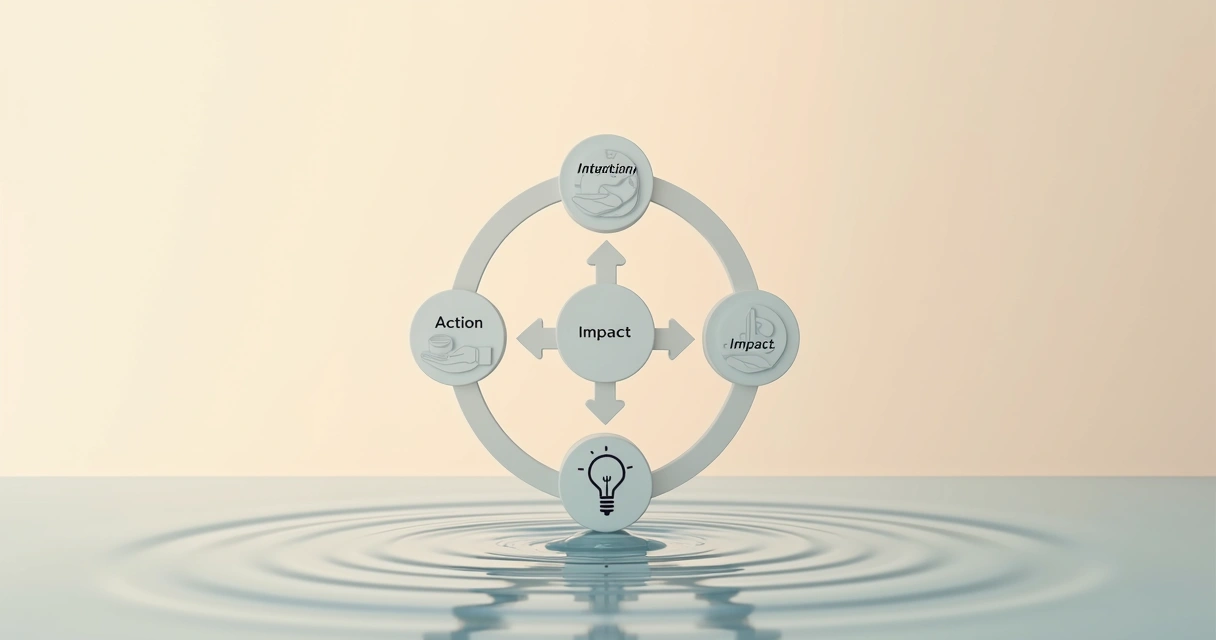
Alignment feels like a cycle, in which we move from intention to action to impact—and back to reflection.
- Setting clear intention: Naming, with honesty, what matters most to us in this moment. We don’t rush, and we question: Is this only for my comfort, or is there a deeper need?
- Choosing conscious action: Deciding how to carry the intention into behavior. Here, we pause to consider what is wise, ethical, and sustainable—not just convenient.
- Observing and accepting impact: Looking at the real results, with eyes wide open, even if they surprise us. Sometimes this means welcoming feedback we’d rather not hear.
- Returning to reflection: Asking: What does this outcome teach me? Do I need to adjust my intention, or try a new action?
When we see alignment as movement—not a straight line, but a loop—we make space for ongoing growth.
Practical steps for alignment in real life
We have practiced and taught several approaches, but what always brings results is a simple, honest routine. Here’s how we encourage real alignment, step by step:
- Pause and clarify your real intention. Put it in words. Ask yourself why this goal or action matters. Get specific.
- Notice emotional and relational context. What emotions arise, and how might these influence your actions? What do those around you feel or expect?
- Choose the next best conscious action. Avoid autopilot. Instead, imagine the different ways you could act and pick the one that matches your intention and values.
- Prepare for, and accept, feedback. After acting, remain open to the outcome—positive, negative, or mixed. Listen fully, not just for confirmation.
- Reflect and realign as needed. If your impact doesn’t match your intention, treat it as honest information, not failure. Adjust future intentions or actions as needed.
This approach isn’t just for big life changes. We’ve used it in daily interactions, conflicts, and even in making system-level decisions. For deeper learning on how context and self-understanding play a role, our guide on self-knowledge is helpful.
Change that is real comes not from force, but from alignment.
Emotional maturity and responsibility in change
So much of getting this right means growing up emotionally. We have seen that emotional maturity isn’t about suppressing feelings, but about owning them. When our intention, action, and impact are out of sync, unmanaged emotions are often the missing puzzle piece.
Emotional maturity allows us to:
- Accept that change takes time and repeated effort
- Stay patient with our mistakes and others’ reactions
- Take responsibility, not just for what we do, but for what happens after
- Reconnect to our values, especially when things feel messy
When we combine these skills, change doesn’t just stick—it deepens. Our page on emotional maturity offers more for those wanting to nurture this aspect of inner growth.

Building coherence in relationships and systems
Alignment goes beyond the individual. We’ve learned that real change also depends on relationships and the broader contexts we are part of. That means considering both our own needs and the expectations or needs of others.
It’s easy to act with good intention, but collective impact demands more. Alignment in a group or system asks that we communicate transparently, check assumptions together, and remain open to group feedback. If you’re interested in how change works across larger contexts, see our thoughts in the systemic change resource.
For those curious about how awareness, feelings, and systemic structures interconnect, more ideas are shared in our consciousness articles.
Integrating self-knowledge for deeper change
When intention, action, and impact are truly aligned, self-knowledge is always at work. We believe that deep self-reflection helps us notice hidden motives, old patterns, or blind spots. Development is not about perfection, but about greater honesty and clarity.
Reflecting on questions such as “What am I really hoping to create?” and “What am I unwilling to see about my impact?” opens up transformative answers. This kind of inquiry is slow but powerful.
Personal transformation is never just about surface shifts. It is a process that welcomes both inner and outer change over time. Our collection on personal growth can guide you to move deeper.
Conclusion
Real change doesn't come from having the right intention alone, or acting without pause, or even hoping for the best outcome. It comes from consciously aligning what we want, what we do, and what results from it. This is ongoing work, not a one-time achievement.
We may not control every outcome, but we can control how honestly we align our intention, action, and impact. Through this, we step closer to real, sustainable transformation—one step at a time.
Frequently asked questions
What is intention, action, and impact?
Intention refers to the reason or purpose behind what we want to do, action is the behavior or step we take, and impact is the real result that occurs because of our action. Each plays a different role in any attempt to create change, and only when they work together do we see change that lasts.
How to align intention with action?
First, we need clear awareness of why we want to act—our honest intention. Then, before acting, we ask if our behavior matches those values and aims. If an action does not reflect the intention, we adjust it until both are in agreement. This might mean pausing, reflecting, or considering options before taking the next step.
Why does impact matter in change?
Impact is the true measure of whether our actions are working as intended. No matter how well-meaning our intention or how carefully we act, if the effect is not what we hoped for, we need to pause and reflect. Impact helps us see if we are on the right track and adapt our approach when needed.
What steps help align intention and impact?
Begin by clarifying your intention and making it specific. Next, choose actions that honestly reflect those intentions. After acting, observe the impact carefully—welcoming honest feedback, not just what feels good. If there is a misalignment, use this information to change actions or sometimes to review your original intention. Ongoing self-reflection supports this continuous alignment.
How can I measure real change?
Real change is measured by the observable, sustained impact of our actions over time. Short-term results can mislead, so we watch for patterns, feedback, and changes that last. We also look for increased coherence between our values, choices, and results. Journaling, peer feedback, or self-reflection are reliable tools to help notice real transformation.